
Rewriting
Rewriting (performance)
Video documentation of performance (single screen film; 45 minutes/stereo)
Summary Statement (300 words)
Rewriting is a practice-based research which reimagines the choreographic, not as a site of pre-conceived conceptual clarity, but as accumulation and overlap of intangible and sometimes redundant knowledges coexisting within sensory and motor memory. Such fragments find context through daily practice of what Deborah Hay1 – describes as learning ‘what my dances will become through the practice of very uninteresting sequences of movement material that has almost no meaning or value to me.’ This echoes the writing of poet and theorist Édouard Glissant2 – who posited that ‘the accumulation of sediments’ would replace the notion of ‘lighting flashes’ within poetic work. The making of dance is repositioned in Rewriting not in relation to the tendency towards concept of the past twenty years, but with weight given rather to the role of slow doing and memorisation, held as resource within the body. It touches upon both the concept of simultaneous overlapping and invisible histories held within the body in the writing of Nadia Serematakis3 – as well as Bojana Kunst’s4 premise that slow and daily practice within contemporary dance culture represents the possibility that ‘there exists another mode of exchange…not economised, not framed in the value of productivity’.
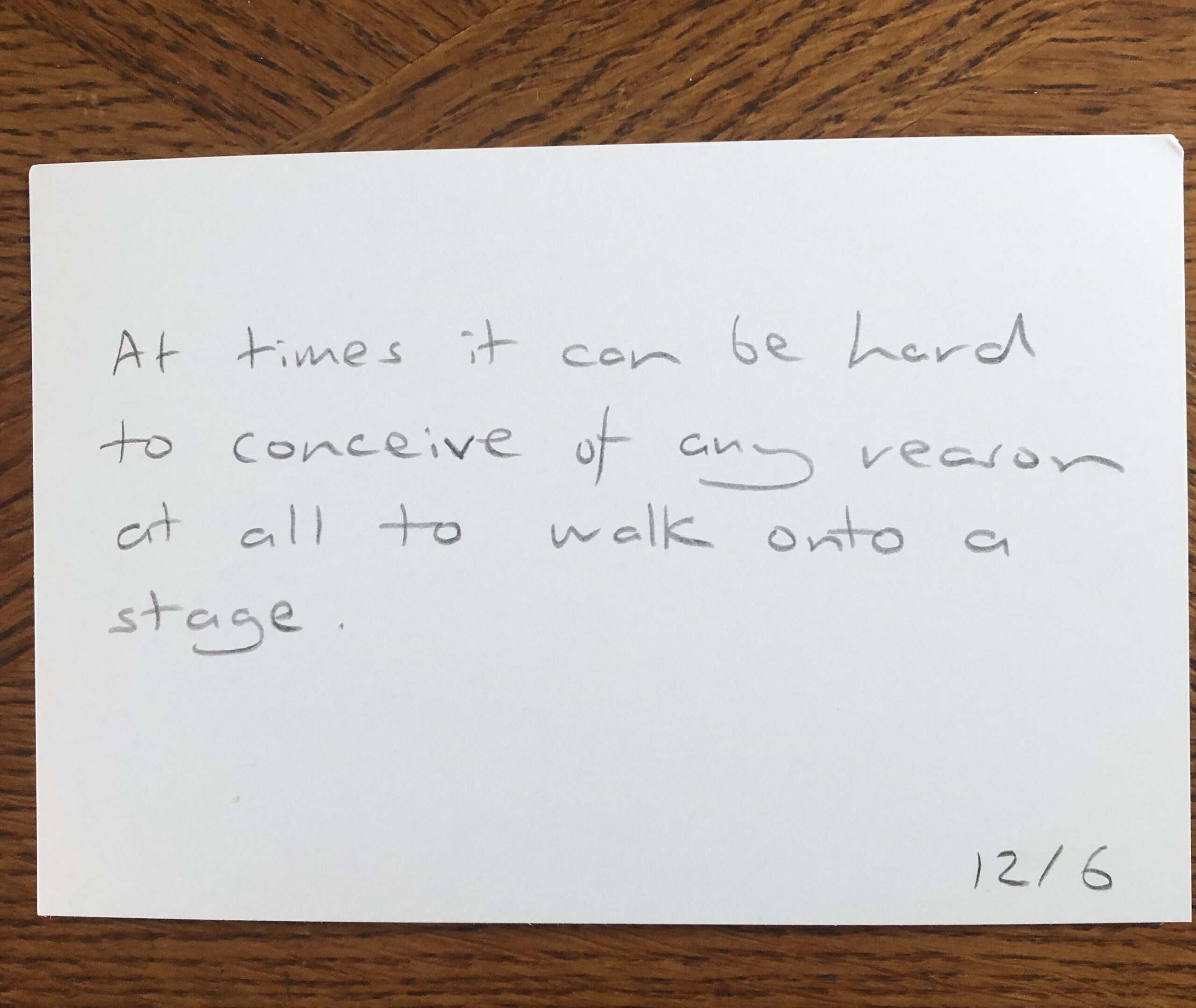
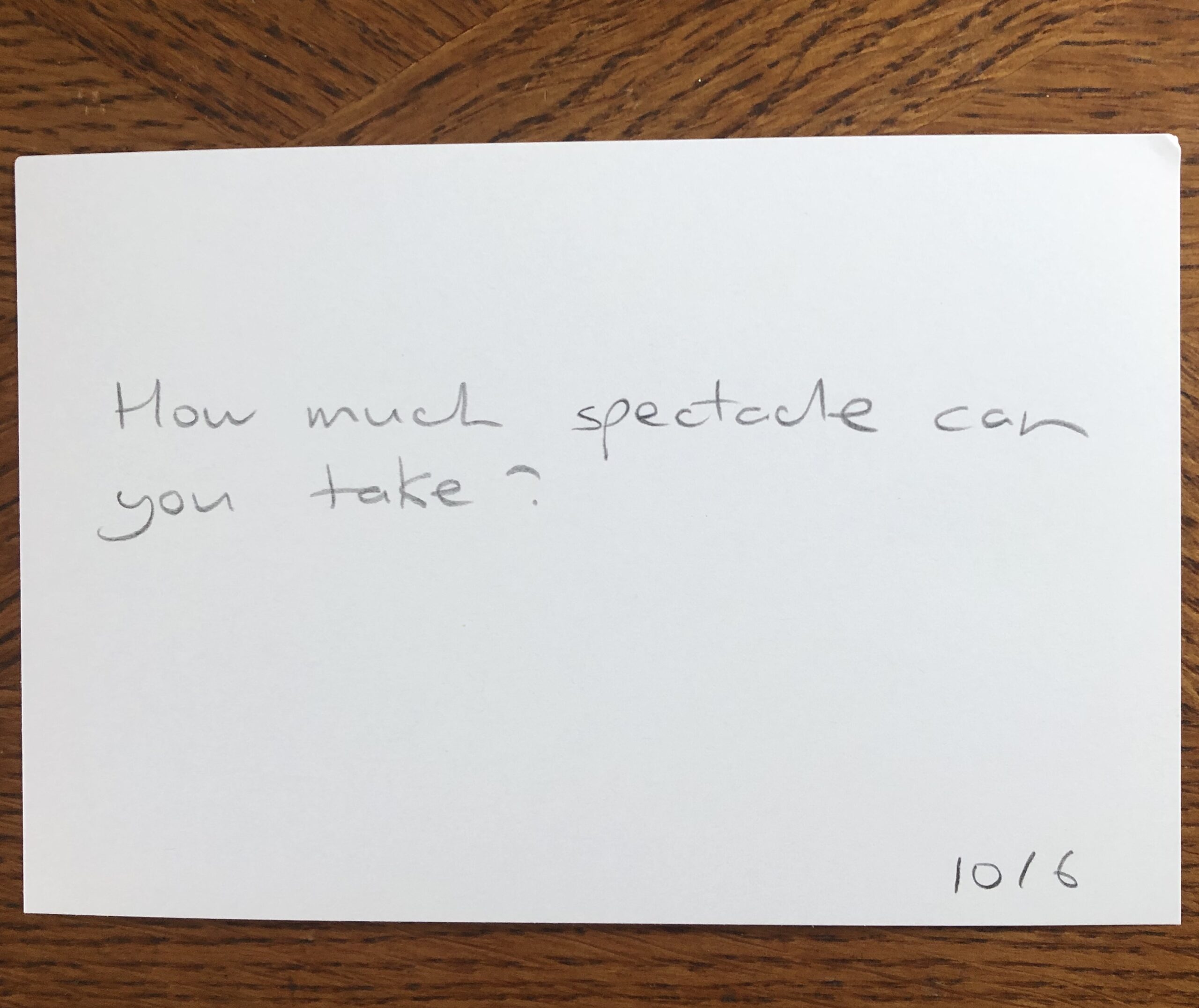
The piece began with a process of daily research into a long memorised sequence of movement from a now abandoned piece which was never performed. What might it mean to have embodied and retained redundant material, cut loose from contextualising anchors? This material is overlapped with a simultaneous memorised lecture on A Choreographer’s Handbook, triggered by 108 postcards each with a statement or question from the book.
The daily practice of Rewriting follows Deborah Hay’s5 methodology (Solo Commissioning Project 1998-2002) of ‘noticing the infinitely momentary feedback that arises from my daily performance…influenced by the immediacy arising from the same questions day after day after day’.
Contextual Information
- Practice Link: https://vimeo.com/407968350/d2b1af7ea4 https://vimeo.com/407954103/6821788b1a (abandoned piece/source – please see 300 Word Summary)
- Production Credits:
- Choreography and Performance by Jonathan Burrows
- Rewriting was co-produced by PACT Zollverein Essen, Sadler’s Wells Theatre London and BIT Teatergarasjen Bergen
- Timescale: 45 minutes
- Premiere: Stamsund International Festival, Norway, 29th May 2019
- Further Performances to Date:
- C-DaRE Coventry University (sharing), 7th February 2019
- Hebden Bridge Arts Festival, 30th June 2019
- Leopold Gallery, Impulstanz Festival Vienna, Austria, 5th (twice), 6th, 7th, 8th August 2019
- Pact Zollverein Essen, Germany, 21st/22nd (twice) March 2020 (cancelled due to coronavirus lockdown)
- Rimi Scene Kunst, Stavanger, Norway, 18th April 2020 (cancelled due to cornavirus lockdown)
- Kaaitheater Brussels, Belgium, 24th/25th April 2020 (cancelled due to cornavirus lockdown)
- Related Presentations by Jonathan Burrows:
- Archive, text written for a video installation Der Moderne Tanz, commissioned as part of the exhibition Art/Music/Dance Staging the Derra de Moroda Dance Archives at the Museum der Moderne Salzburg Austria, 2016. Link to video installation: Der Moderne Tanz
- Politics, talk given at Inventur#2–Contemporary Dance And Performance Conference at Tanzhaus NRW Düsseldorf, June 2nd 2017 (also published as part of A World Of Muscle, Bone And Organs, Research And Scholarship In Dance, an ebook edited by Simon Ellis, Hetty Blades and Charlotte Waelde for CDaRE Coventry University, 2018.)
- The gaps between, talk on practice and the notion of accumulating dust in the performance work of Mette Edvardsen and Vlatka Horvat, given as part of the series Realities of the Scripted for Hessische Theaterakademie and Department of Applied Theatre Studies Giessen University, 2019
- What would be another word for it?, talk on practice as not yet art, invited by Chrysa Parkinson for Doch School of Dance and Circus, Stockholm University of the Arts, 2018
- What would be another word for it?, performance version of talk, given as closing lecture for CDaRE Somatics Conference, Coventry University, 2019
- Music For Lectures/She Dancing, talk with rock band led by Katye Coe, looking at slow practice in relation to the autonomy of the woman dancer, performances so far in: – Pact Zollverein Essen, 3rd February 2018 – mac Birmingham, 13th June 2018 – Hebden Bridge Arts Festival Hebden Bridge, June 29th 2019 – NottDance Festival Nottingham, 9th October 2019
- Other Writing and Citations in relation to Burrows’ research on practice in performance:
- A Choreographer’s Handbook, by Jonathan Burrows, Routledge, 2010
- Jonathan Burrows, Towards a Minor Dance, by Daniella Perazzo Domm, published by Palgrave MacMacmillan, 2019
- Choreographing Problems, by Bojana Cvejić, Palgrave MacMillan, 2014
- The Persistence of Dance: Choreography, Art and Experimental Composition Since the 1950s, by Erin Brannigan, Oxford University Press, 2020
Images of a selection from the 108 hand written cards used during the performance of Rewriting
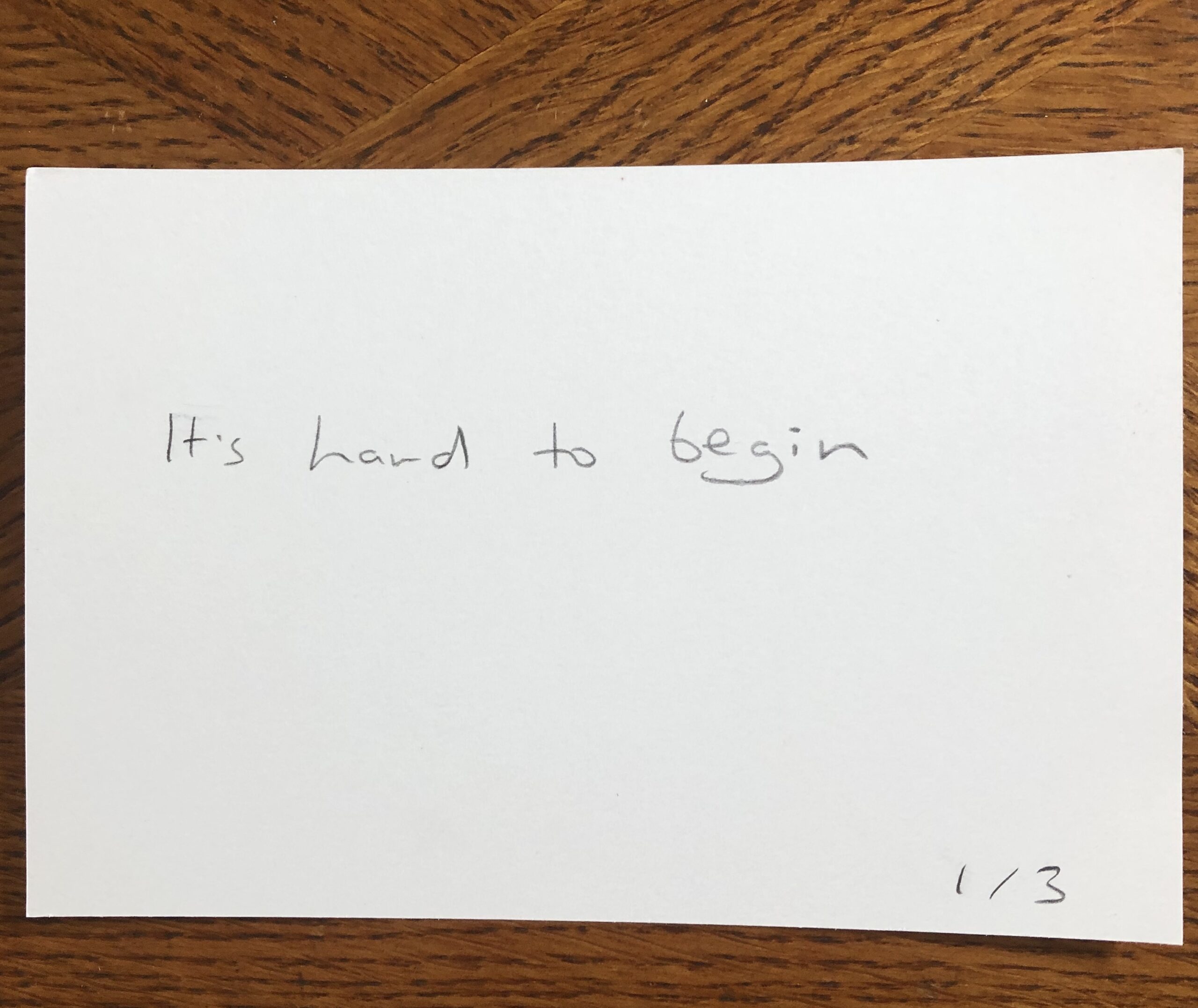
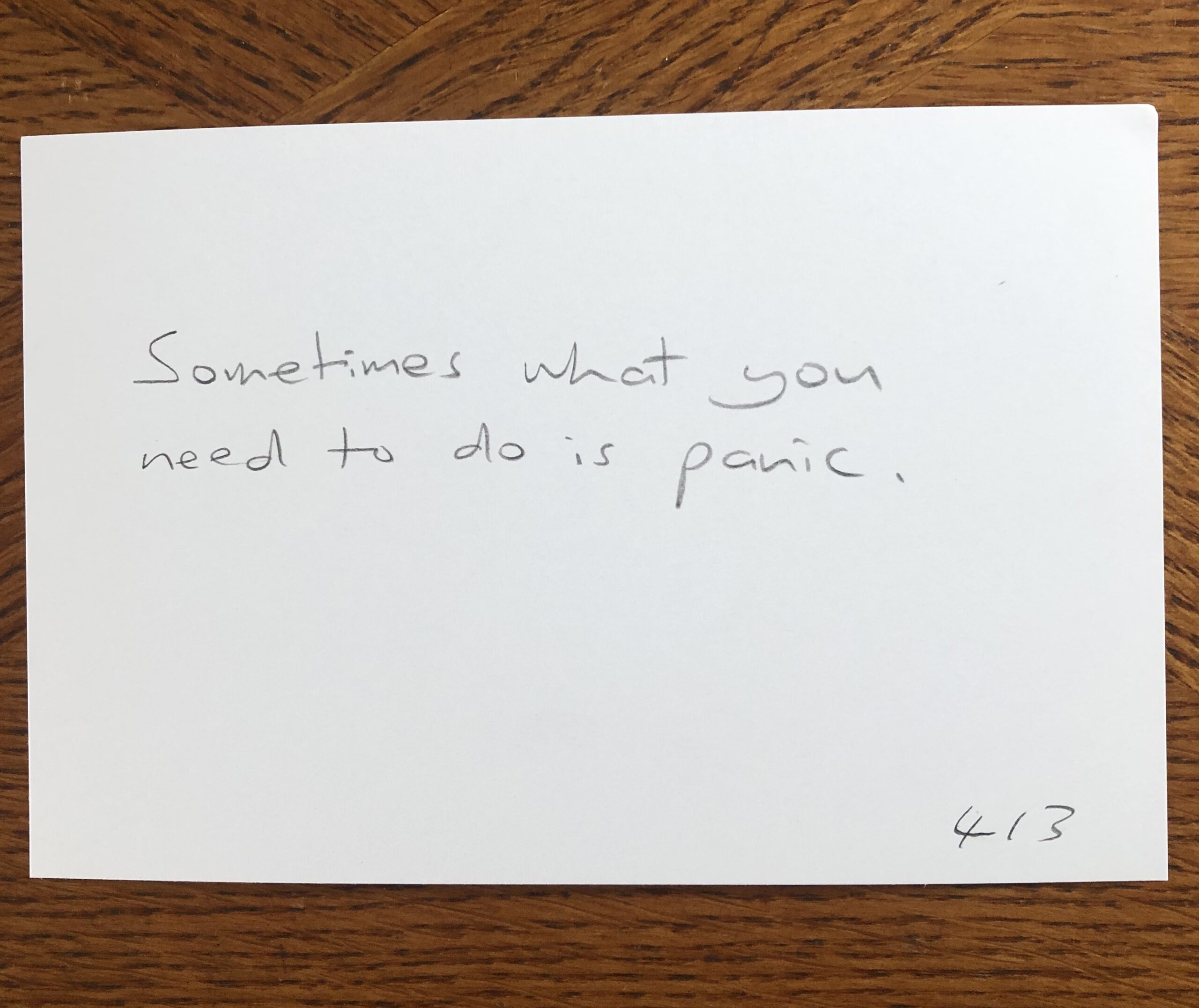
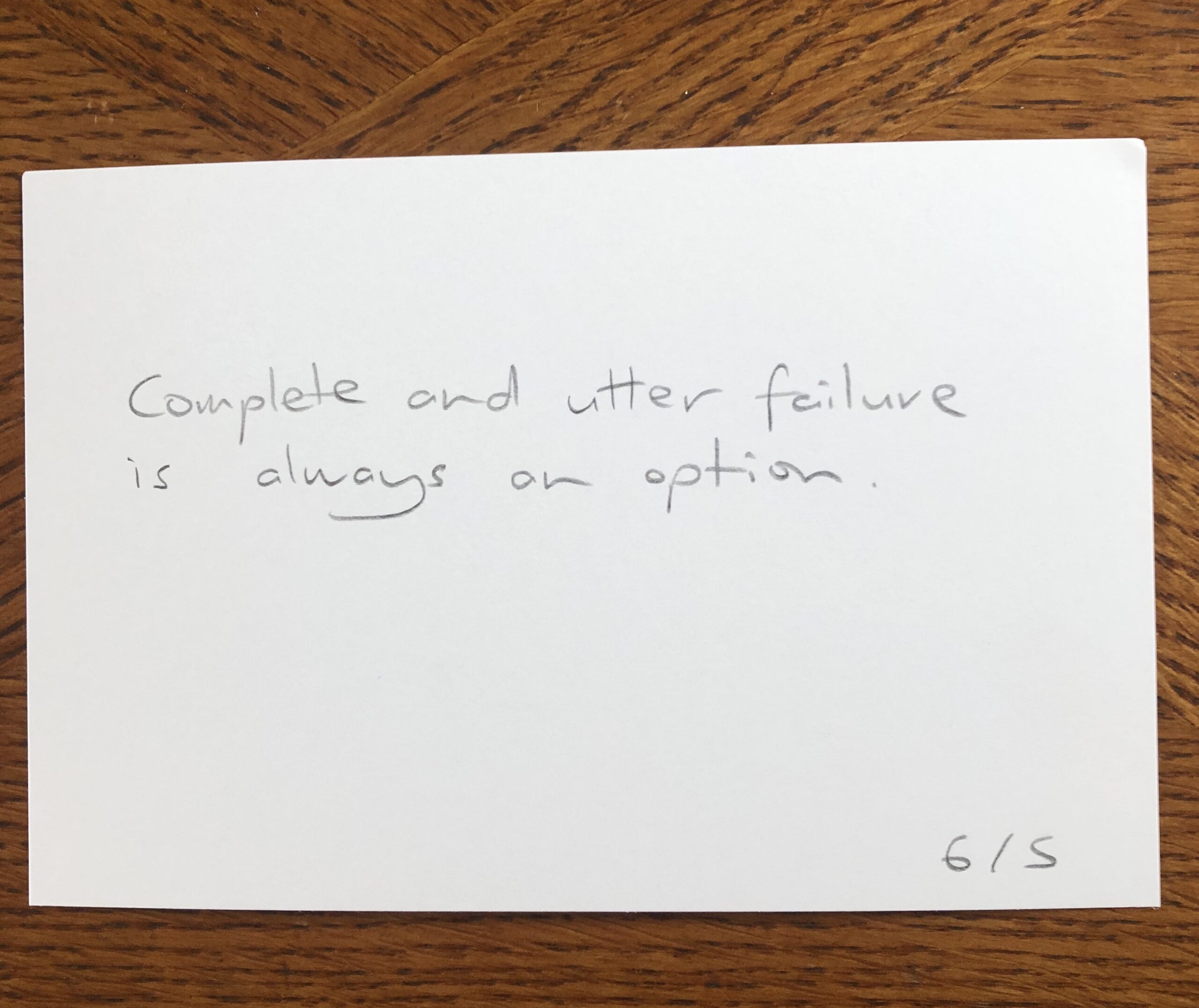
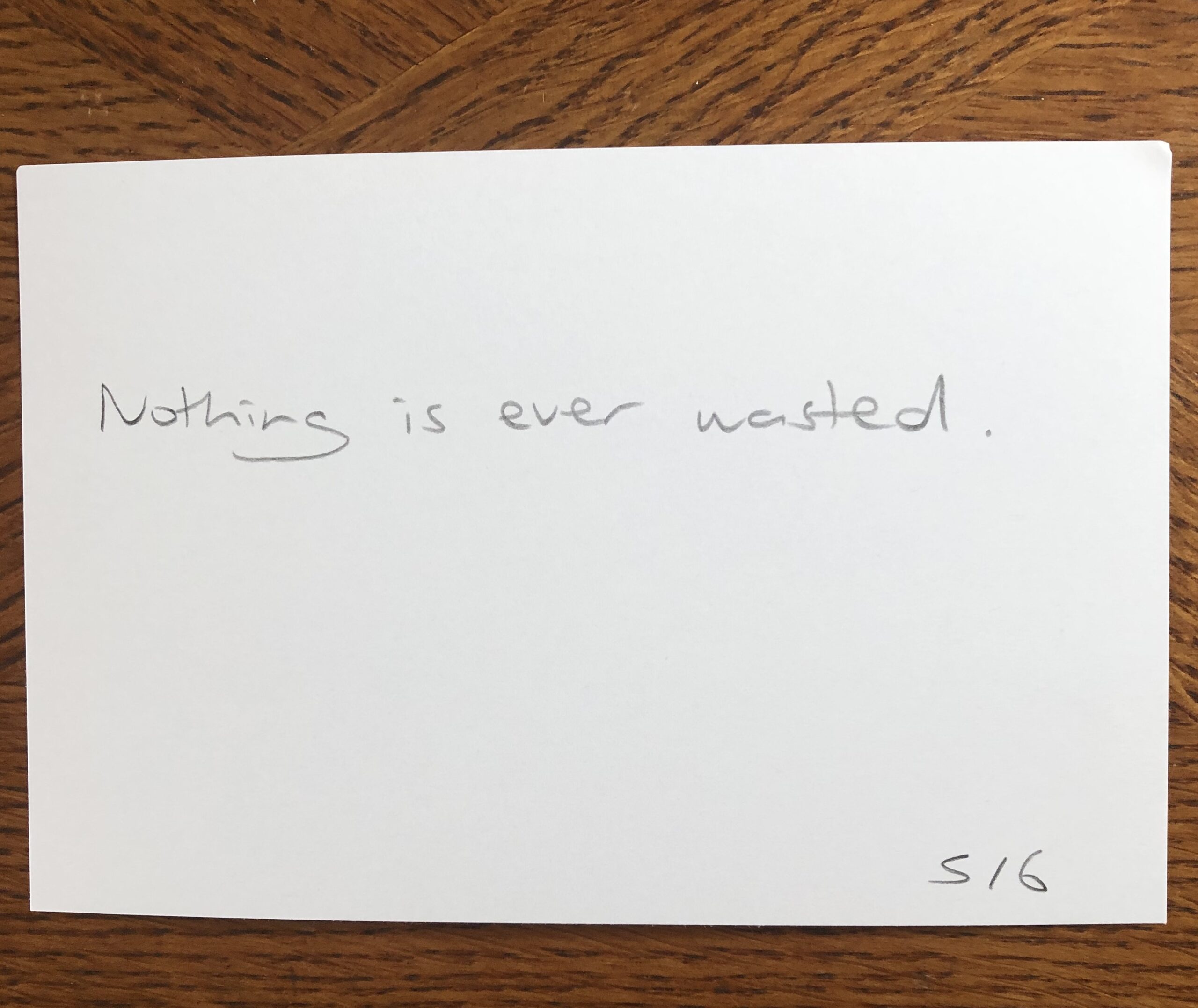
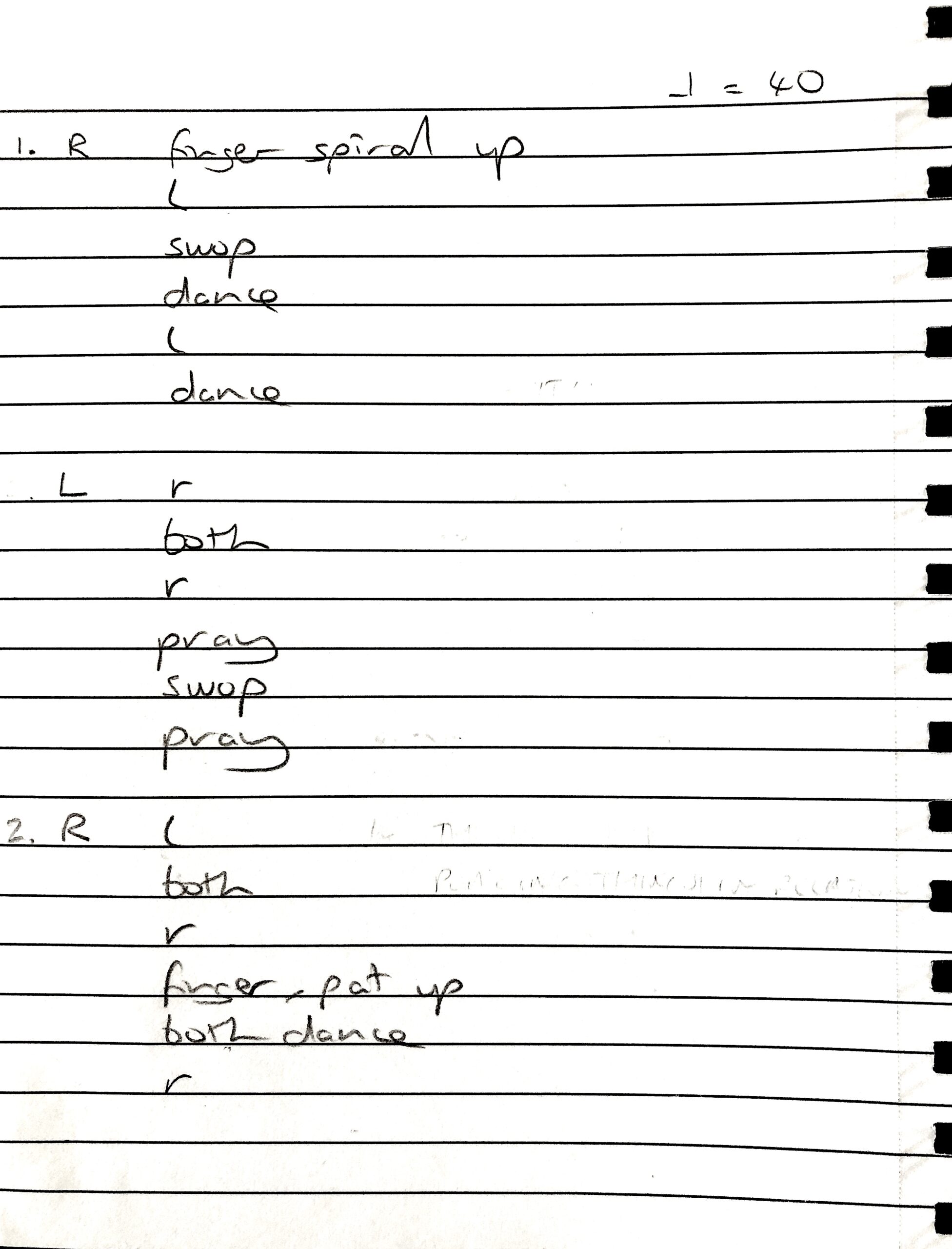
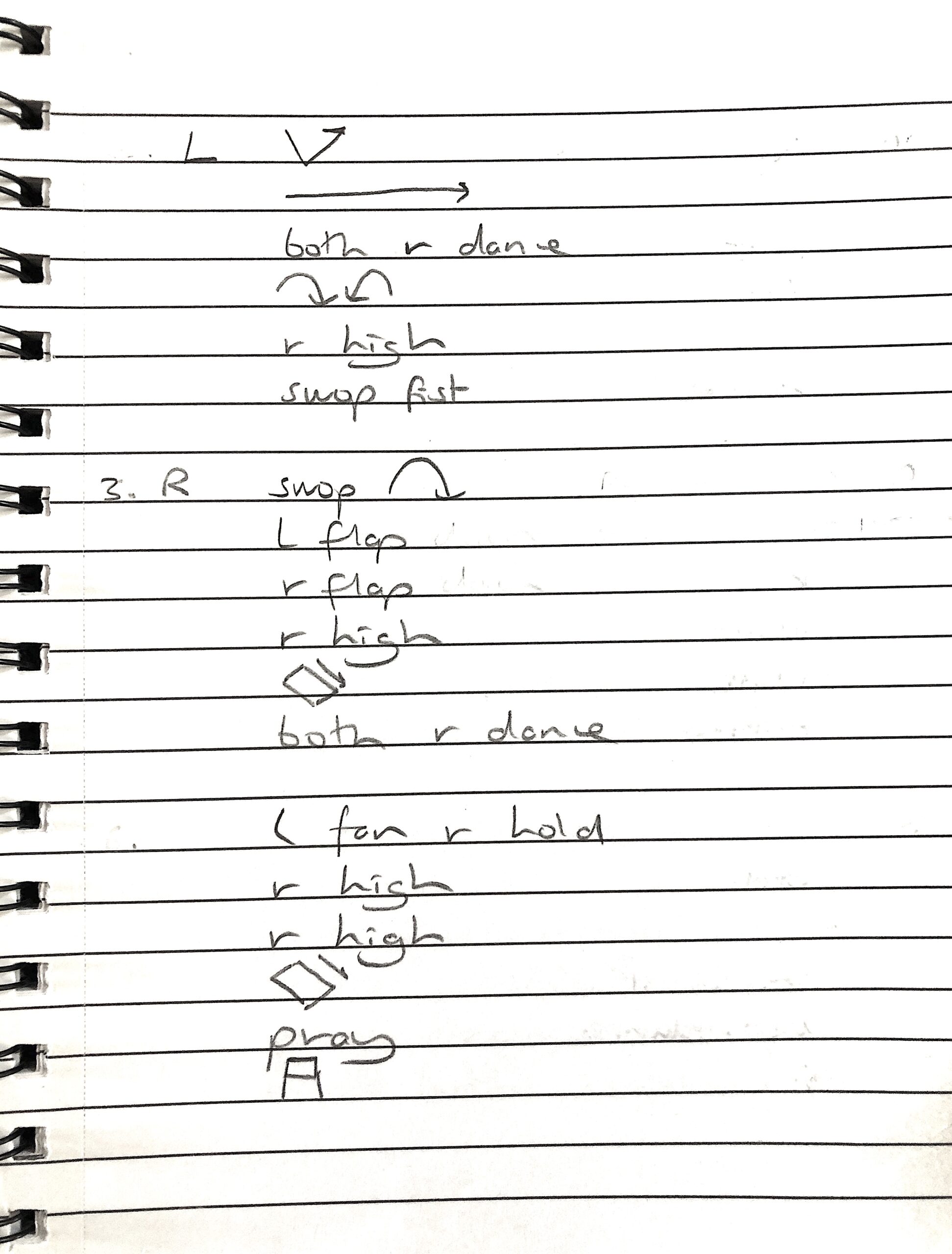
Images of two pages from the written score for Rewriting
Header Image Credit:
Rewriting. Choreography and performance: Jonathan Burrows; Photograph: © Hugo Glendinning (2019)